 affordadmin
 November 18, 2025
 affordadmin
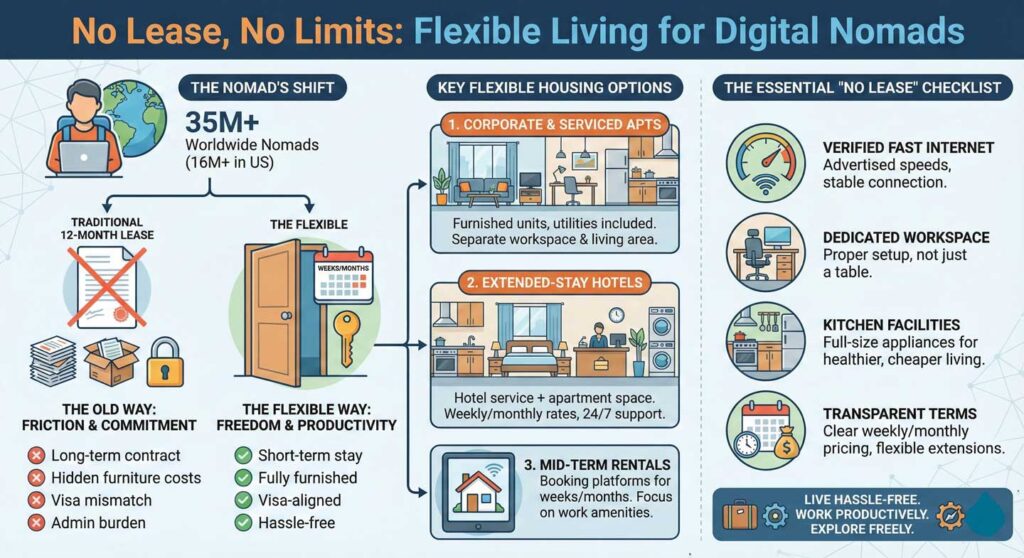
Remote work has untied millions of people from traditional offices, and a growing share of them are choosing to live as digital nomads. Recent estimates suggest that more than 35 million people worldwide now identify with this lifestyle, including over 16 million in the United States alone. For this group, the lease-bound apartment model clashes with a life built around mobility, experimentation, and seasonal moves.
This is where “no lease” living comes in: accommodation that feels like home, but without a year-long commitment or piles of paperwork. For digital nomads navigating changing time zones and client calls, the right stay is not just a bed, it is a productivity tool and a sanity saver.
Most digital nomads stay in one place for a few weeks to a few months at a time, and nearly 9 in 10 change locations within six months. A standard 12-month lease simply does not fit that rhythm. Flexible housing options solve several recurring pain points:
A flexible stay strips out that friction. You pay for the months you need, walk into a furnished space, log onto reliable internet, and go straight to work.
Digital nomads now have a broad menu of “no lease” choices, especially in business hubs and college towns across the United States:
Corporate housing providers and serviced apartments offer fully furnished units with kitchens, utilities included, and terms measured in weeks or months rather than years. These properties are built for traveling professionals, so you often get a separate living area, workspace, and bedroom instead of one multipurpose hotel room.
Many hotel brands now run extended-stay concepts with full kitchens or kitchenettes, weekly and monthly rates, on-site laundry, and strong Wi-Fi. These combine hotel-style service with apartment-style space, which appeals to nomads who want housekeeping and 24/7 front desk support. They are also easy to book on short notice, a big advantage when plans shift.
The rise of extended stay hotels for remote workers reflects how common “work from anywhere” has become. Remote roles now cover more than a fifth of the U.S. workforce.
Monthly rentals on major booking platforms offer another path. Many listings now highlight work desks and high-speed Wi-Fi, aiming directly at digital nomads who plan to stay for several weeks or months rather than a weekend.

Flexible living does not mean lowering standards. For digital nomads, a few features should almost be non-negotiable:
1. Reliable, fast internet
Work lives or dies on bandwidth. Look for properties that advertise upload and download speeds, not just “Wi-Fi included,” and read recent reviews to confirm the connection stays stable during peak hours.
2. Dedicated workspace
A proper desk and ergonomic chair do more for your productivity than any new app. Some properties also offer access to conference rooms or business centers, which helps with client calls and workshops.
3. Kitchen facilities
Kitchens with full-size appliances cut food costs and make longer stays healthier and more sustainable. Many extended-stay brands now highlight fully equipped kitchens as a core amenity, not an afterthought.
4. Laundry and housekeeping
On-site laundry and periodic cleaning keep life manageable during long workweeks. Weekly housekeeping, in particular, reduces chore time without taking away privacy.
5. Transparent, flexible terms
Look for clear weekly or monthly pricing, no surprise resort fees, and the option to extend or shorten your stay within reasonable notice periods.
Also Read: The Rise of Bleisure: Blending Business and Leisure in Extended Stay Hotels
To make flexible living sustainable, a bit of planning goes a long way:
Whether you are exploring new U.S. hubs or returning to a favorite corner of Roanoke, Virginia, properties designed as work-friendly rentals with fast Wi-Fi. and home-like comfort make “no lease, no limits” more than a slogan. They turn it into a workable way of life. Ready to make your stay hassle-free and productive?
Book your suite now at Affordable Corporate Suites and get settled with fast Wi-Fi, full amenities, and flexible weekly or monthly plans, no long-term lease required. Visit https://affordablecorporatesuites.net/